ساخت عکس دهه ۵۰ با هوش مصنوعی؛ راهنمای جامع خلق پرترههای تاریخی ایران
ساخت عکس دهه ۵۰ با هوش مصنوعی یکی از جذابترین و پرطرفدارترین حوزههای تولید محتوای تصویری مدرن است که به کاربران امکان میدهد با ترکیب عکسهای چهره امروزی و بازسازی سبکهای تاریخی، پرترههایی خیرهکننده با حسوحال نوستالژیک دوران پهلوی دوم و فضای ایران در سالهای ۱۳۵۰ خورشیدی پدید آورند. پیشرفتهای چشمگیر مدلهای زایای تصویر در پلتفرمهایی نظیر چتجیپیتی (ChatGPT) و جمنای (Google Gemini) این امکان را فراهم ساختهاند تا بدون نیاز به تسلط بر نرمافزارهای پیچیدهای چون فتوشاپ، تنها با تکیه بر یک عکس مرجع و نوشتن متن دستوری دقیق، آثاری واقعگرایانه با استانداردهای بصری و سینمایی آن دوران تولید شود.
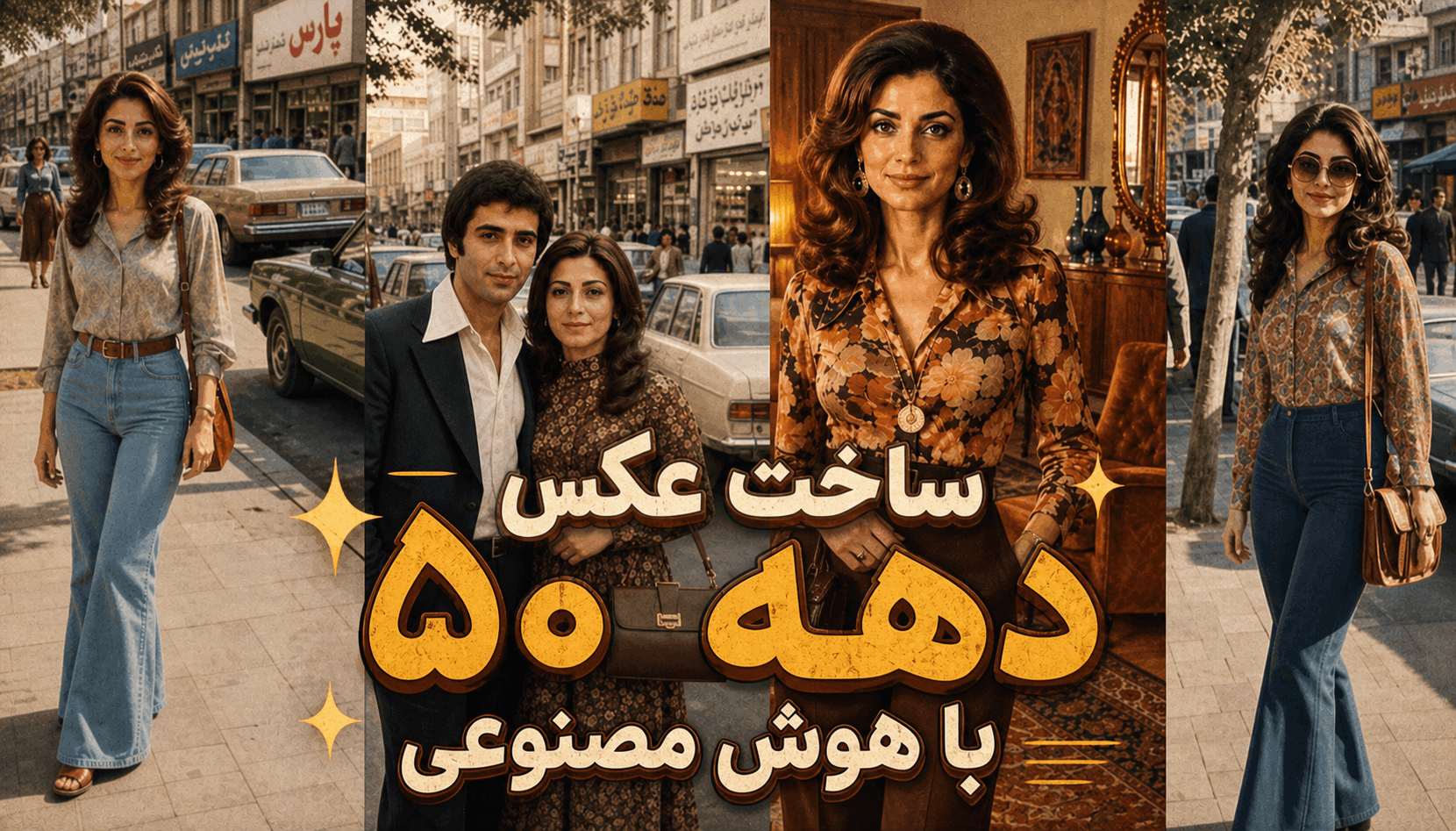
بازآفرینی بصری تاریخ ایران با ابزارهای نوین پردازش تصویر
تاریخ معاصر ایران بهویژه دهه ۱۳۵۰ خورشیدی (۱۹۷۰ میلادی)، دورهای منحصربهفرد از نظر زیباییشناسی، معماری مدرنیستی شهری، پوشاک متمایز و سبک زندگی طبقه متوسط به شمار میرود. بازآفرینی این اتمسفر در فضای دیجیتال نیازمند شناخت دقیق از المانهای فرهنگی و نشانهشناسی بصری آن دوران است. ترکیب خطوط اتومبیلهای نمادین مانند پیکان جوانان یا خودروهای پهنپیکر آمریکایی، تابلوهای نئونی و سردرهای خطاطیشده فروشگاهها با فونتهای اصیل فارسی، و بافت گرم فیلمهای عکاسی ۳۵ میلیمتری نظیر کداک، پایههای اصلی ساخت این آثار را تشکیل میدهند.
هوش مصنوعی در مواجهه با تصاویر تاریخی، فرآیند تصویرسازی را صرفاً بر پایه فیلترگذاری سطحی انجام نمیدهد؛ بلکه ساختار نورپردازی، بافت دانهبندی فیلم (Film Grain)، عمق میدان عدسیهای اپتیکال قدیمی و جنس پارچههای رایج آن عصر را به صورت عمیق بازتولید میکند. این رویکرد به ویژه برای نسل جوان و نوجوان علاقهمند به روایتگری تاریخی و بازنمایی هویت ملی، فرصتی ارزشمند برای ادغام هنر نو و تاریخ فراهم کرده است.
مراحل گامبهگام ساخت عکس دهه ۵۰ با هوش مصنوعی
برای دستیابی به یک پرتره تاریخی باکیفیت و بدون نقص، رعایت ترتیبی ساختاریافته از گامهای ورودی، پردازش و خروجی الزامی است. این مسیر شامل سه گام کلیدی و پیوسته است:
گام اول: ورود به سرویس و بارگذاری تصویر مرجع
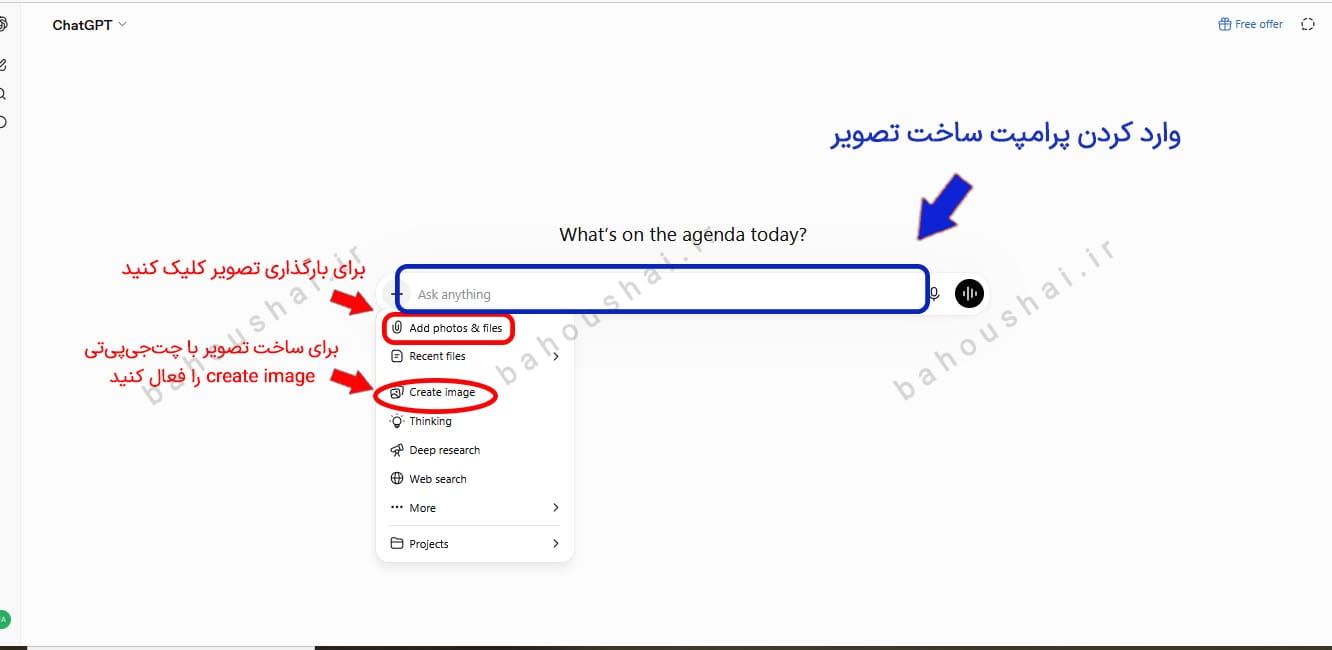
در گام نخست، وارد رابط کاربری مدل مورد نظر خود در وبسایت یا اپلیکیشن ChatGPT (بخش تصویرسازی مبتنی بر GPT-4o یا DALL-E) یا Google Gemini شوید. سپس از طریق نماد بارگذاری یا آیکون مثبت (+) که در کنار کادر متنی گفتگو قرار دارد، تصویر پرتره چهره خود یا فرد مد نظر را انتخاب و بارگذاری کنید.
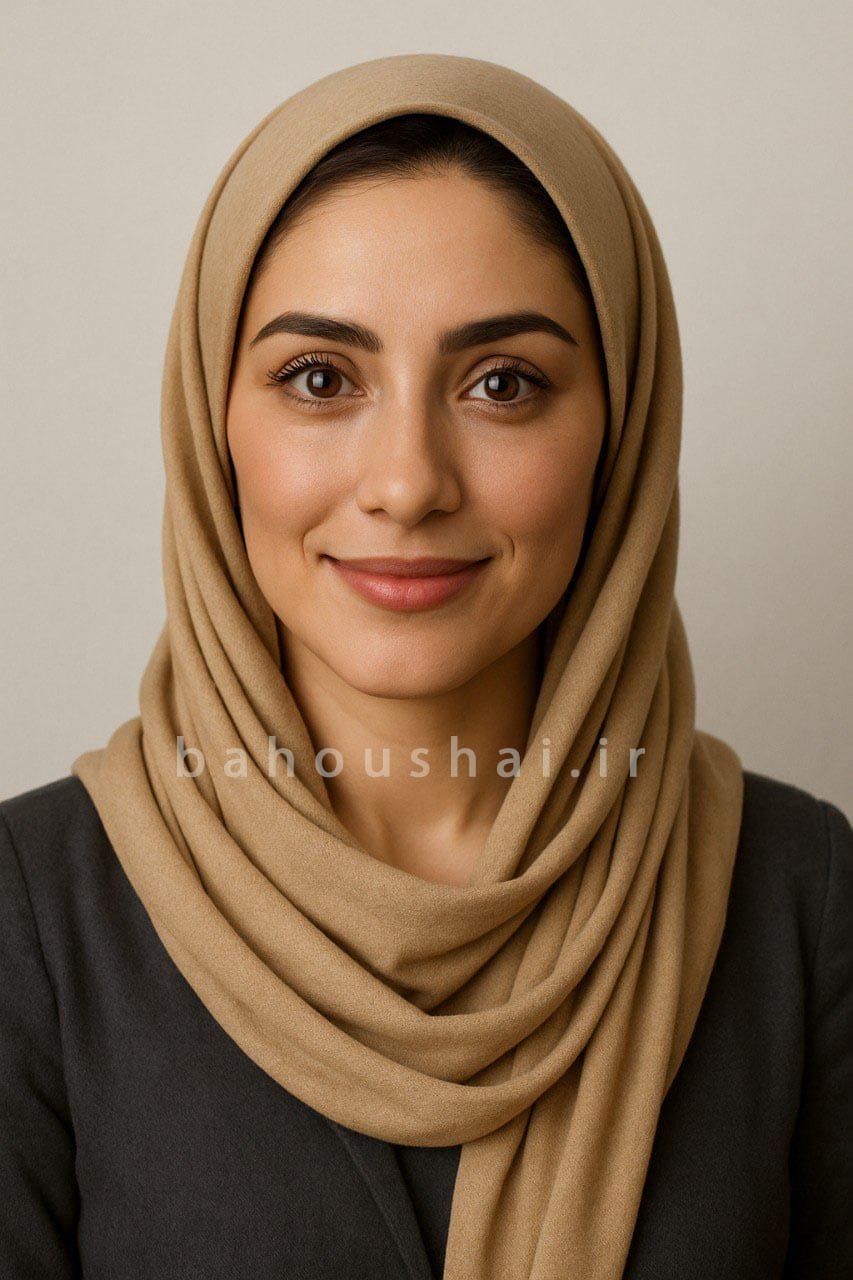

برای رسیدن به بهترین شباهت چهره، تصویر مرجع باید دارای ویژگیهای استاندارد زیر باشد:
- نور طبیعی و یکدست بر روی تمامی ابعاد صورت بدون سایههای خشن
- زاویه چهره رو به دوربین (Front-facing) یا سه رخ ملایم
- کیفیت و وضوح کافی بدون تاری حرکتی و فاقد فیلترهای اغراقآمیز موبایلی
- حالت چهره طبیعی و آرام به منظور ادغام راحتتر با ژستهای تاریخی
گام دوم: تنظیم و ارسال پرامپت مهندسیشده
پس از بارگذاری تصویر در کادر پیام، متن دستور ساختاری (پرامپت) را با دقت و به زبان انگلیسی در کادر گفتگو وارد کنید. زبان انگلیسی به دلیل وسعت بانک واژگان مدلهای هوش مصنوعی، بالاترین میزان هماهنگی را با بافت، سبک نوری و اجزای تاریخی ایجاد میکند. استفاده از کلمات کلیدی استاندارد مانند نوع پارچه، سبک موی دهه هفتاد میلادی، نور خورشید عصرگاهی و بازتاب فیلم ۳۵ میلیمتری در این گام تعیینکننده است.
گام سوم: بازبینی، پالایش و تکرار هوشمند
پس از پردازش و تولید اولین خروجی، تصویر را به دقت بررسی کنید. در صورتی که ساختار چهره، نور، پسزمینه یا سبک پوشش کاملاً منطبق بر خواست شما نبود، نیازی به شروع فرآیند از ابتدا نیست. کافی است از قابلیت بازتولید (Regenerate) استفاده کنید یا در پیام بعدی، تغییرات مد نظر خود را به صورت دستورهای اصلاحی به سیستم بدهید تا تصویر نهایی به بالاترین درجه مطلوبیت برسد.
نمونه پرامپتهای استاندارد برای ساخت پرترههای دهه پنجاه
در ادامه، دو نمونه پرامپت جامع و بهینهسازیشده برای کاراکترهای زن و مرد ارائه شده است که میتوانید آنها را به صورت مستقیم در کادر متنی ابزارها کپی کنید:
پرامپت پرتره زنانه در فضای خیابانی تهران دهه پنجاه
این پرامپت بر پوشش مد روز، مدل موی حجیم دهه ۵۰، المانهای معماری و حسوحال عکاسی خیابانی تمرکز دارد:
A stunningly beautiful young Iranian woman standing on a vibrant street in 1970s Tehran, wearing classic retro Iranian fashion from the 1350s. She is dressed in high-waisted bell-bottom trousers and a stylish, colorful vintage blouse. Her hair is styled in a voluminous, wavy 70s blowout, accessorized with oversized retro sunglasses. She has highly detailed, expressive Iranian facial features. The background features a sunlit, bustling vintage street with nostalgic storefronts, classic cars, pedestrians, authentic 1970s Tehran atmosphere, warm natural sunlight, realistic film grain, vintage color tones, cinematic composition, highly detailed, photorealistic, authentic Persian retro aesthetic --ar 4:5 --style raw --v 6.0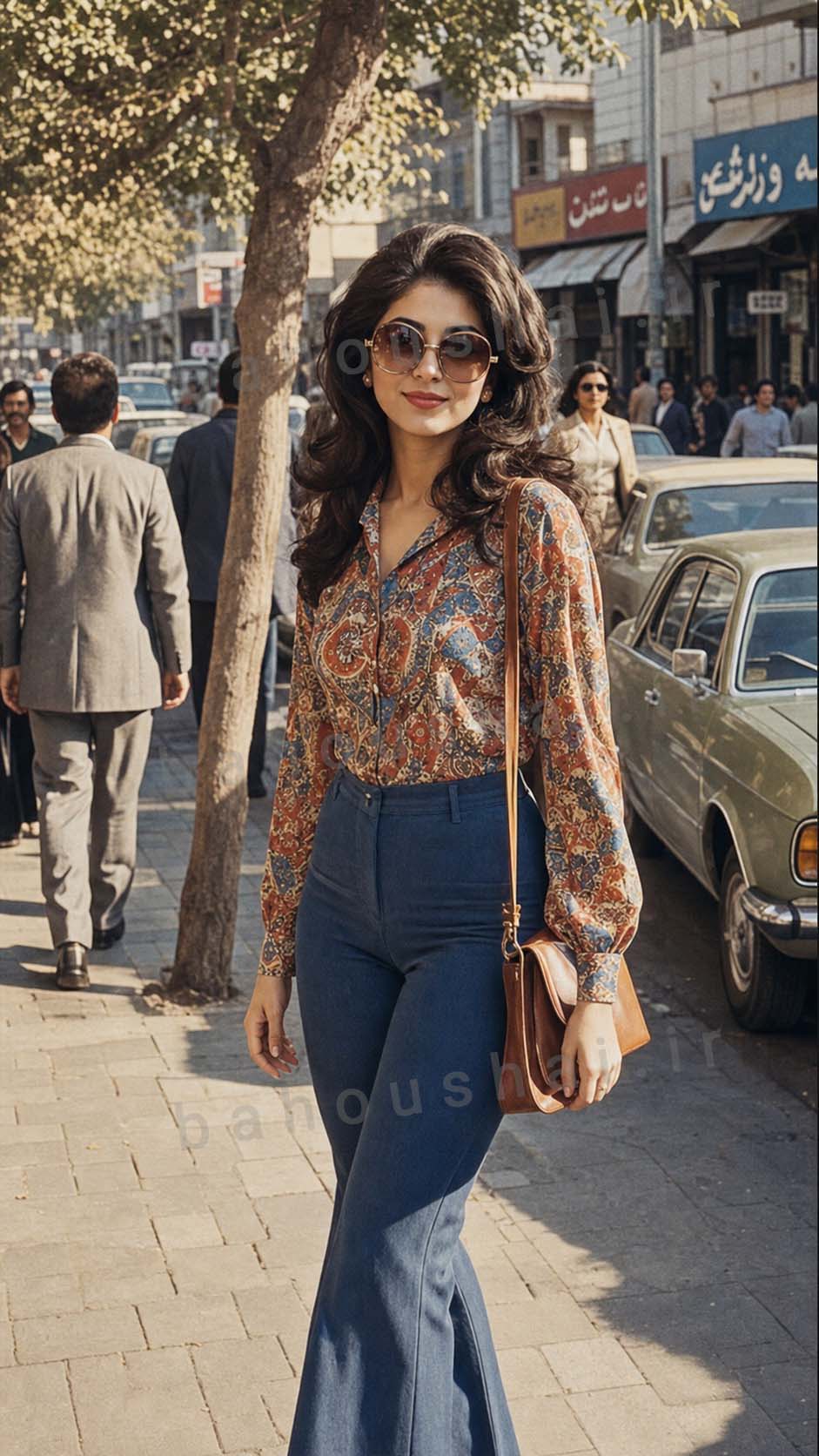
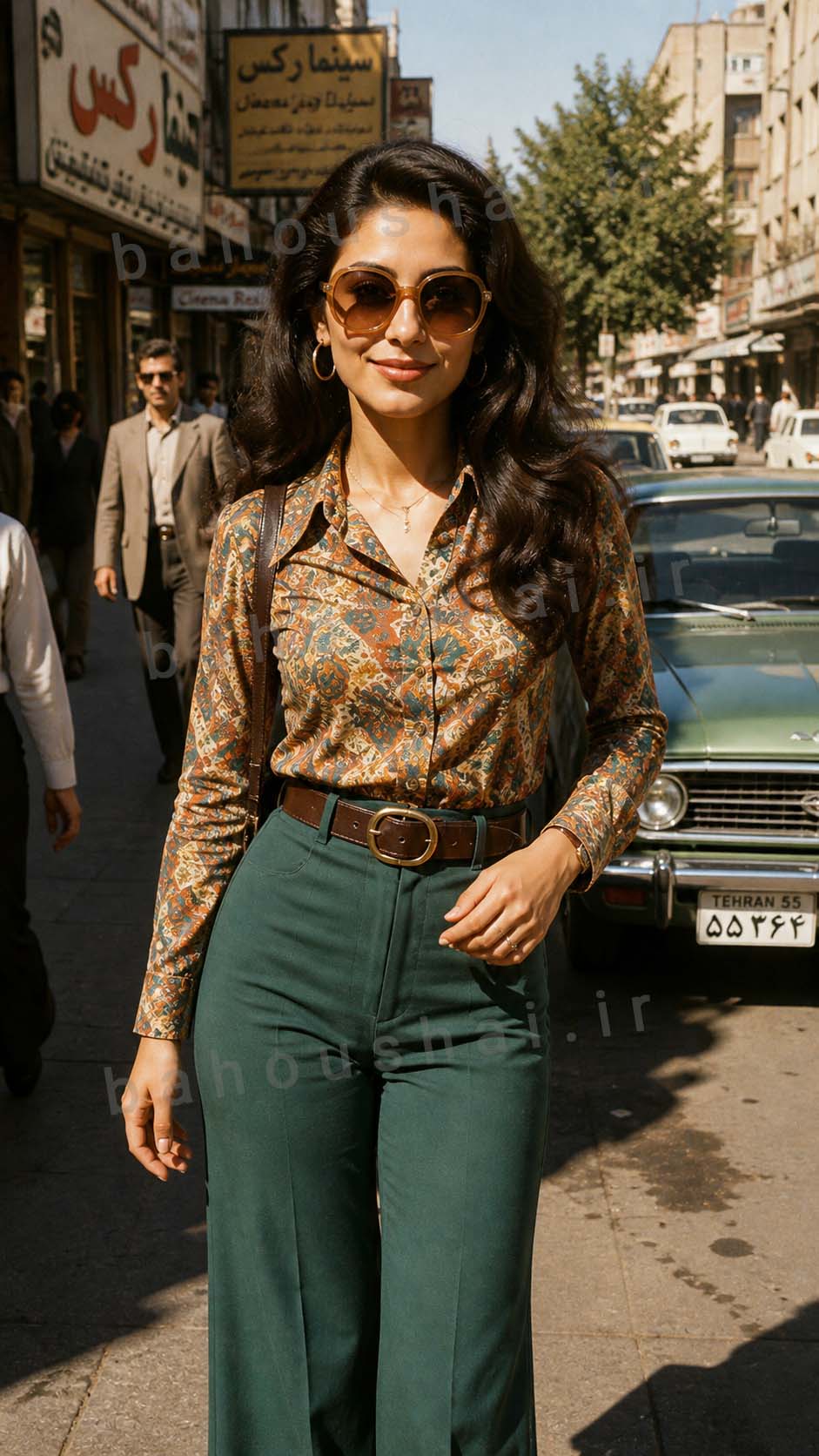
نمونه تصویر با پرامپت :
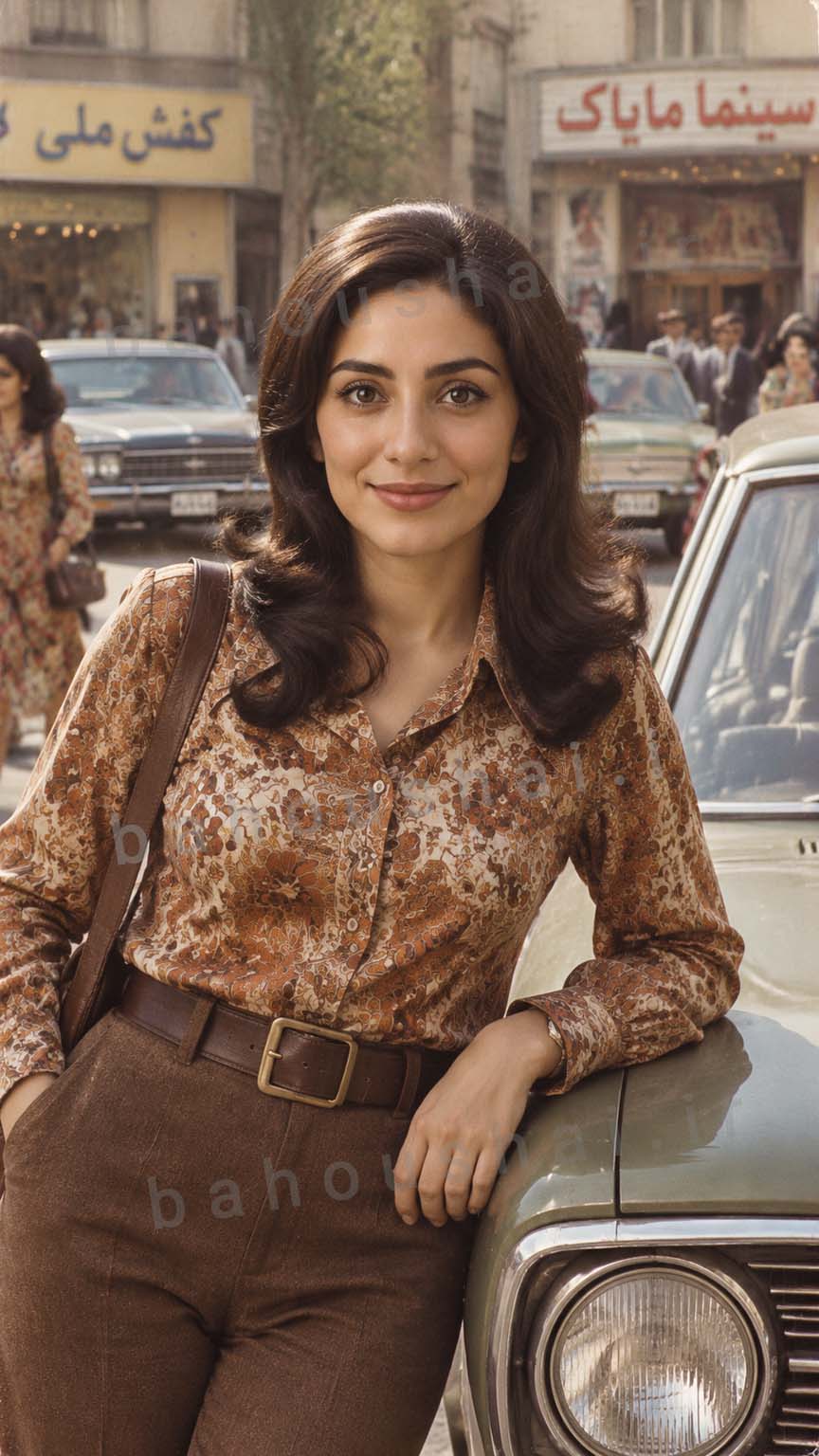 پرامپت:
Create an extremely realistic vintage street portrait based on the uploaded reference photo.
Preserve the woman’s facial identity, facial features, skin tone, natural appearance, body shape and proportions exactly as shown in the reference image. Do not make her thinner, heavier, taller or shorter.
Place her on an authentic Iranian urban street during the 1970s, specifically the Iranian 1350s before the Revolution.
She is standing naturally on the sidewalk and posing elegantly, casually leaning against an authentic early Iranian Paykan based on the Hillman Hunter. The Paykan must have the classic early-1970s boxy British-sedan design, chrome bumpers, round headlights, vintage grille, steel wheels and early-generation appearance.
Other cars in the background should include authentic 1960s–early 1970s American classics such as Chevrolet Impala, Chevrolet Nova, Cadillac DeVille, Buick LeSabre and Pontiac Catalina. Use historically accurate Iranian license plates from the 1970s.
The woman is NOT wearing a headscarf. Her hairstyle and clothing should be randomly generated but authentically fashionable for an Iranian woman in the 1970s. Do not specify a particular outfit.
She looks DIRECTLY at the camera with natural eye contact. Her expression is elegant, calm and confident. Her pose should feel spontaneous and natural, as if a photographer stopped her on the street and captured the moment.
COMPOSITION:
Make the portrait close and intimate. Frame the woman mainly from the chest/waist upward, with only a small portion of her lower body visible at the bottom of the frame. The woman should occupy most of the image.Keep the camera relatively close to the subject and approximately at eye level. Do not use a distant full-body composition.
Vertical 2:3 composition. Strong shallow depth of field with a heavily blurred background and soft natural bokeh. Only a small amount of background detail should remain recognizable as a 1970s Iranian street.
The street should contain authentic 1970s Iranian architecture, storefronts, pedestrians, cafés, cinemas and Persian commercial signs. Women visible anywhere in the background must also be without headscarves, consistent with the pre-Revolution Iranian 1970s setting.
RANDOM PERSIAN STOREFRONTS AND SIGNS:
For every generation, randomly select only a few different signs from the following list. Do NOT show all of them at once. Every new image should use a different random combination and placement of signs whenever possible.Possible signs:
«کفش ملی»
«فروشگاه بزرگ ایران»
«ایران گارمنت»
«کافه کوچینی»
«سینما مایاک»
«گراند سینما»
«کفش بلا»Randomize which signs appear in each generation so that every image has a different combination of shops, cafés and cinemas.
Whenever a Persian sign appears, show the COMPLETE name exactly as written above, with correct Persian spelling, natural authentic 1970s Iranian typography and realistic storefront presentation.
Persian signs must be fully visible and readable whenever they are included. Do not crop, distort, misspell, rearrange, abbreviate or replace the text with meaningless pseudo-Persian writing.
Use period-authentic Iranian storefronts, hand-painted or vintage commercial lettering, realistic 1970s shop facades and historically appropriate materials.
Keep the signs limited in number and naturally integrated into the softly blurred background so they add historical authenticity without distracting from the woman.
PHOTOGRAPHIC STYLE:
Make the image look like a genuine color photograph actually taken in Iran during the 1970s with a real 35mm analog film camera.Warm, slightly muted vintage colors, natural daylight, soft highlights, gentle contrast, natural skin tones, subtle film grain, slight color fading, soft optical rendering, mild halation and authentic analog film texture.
The image should have the imperfections and optical character of genuine vintage 35mm color film photography.
Do NOT use a modern digital appearance, HDR, excessive sharpness, artificial cinematic lighting, dramatic color grading or a simple sepia filter.
…
The final image must feel like an authentic candid Iranian street photograph from the 1970s, photographed naturally on location.NEGATIVE REQUIREMENTS:
NO headscarf on the main woman.
NO headscarves on women visible in the background.
NO modern cars.
NO modern clothing.
NO modern license plates.
NO modern buildings.
NO modern architecture.
NO modern storefronts.
NO modern digital appearance.
NO HDR.
NO excessive sharpness.
NO excessive background detail.
NO excessive cinematic lighting.
NO sepia-only effect.
NO distorted Persian writing.
NO incomplete Persian signs.
NO misspelled Persian signs.
NO meaningless pseudo-Persian text.
NO distant full-body framing.FINAL IMAGE:
Authentic Iranian 1970s atmosphere.
Pre-Revolution Iranian 1350s setting.
Close intimate half-body portrait.
Small portion of lower body visible.
Woman occupies most of the frame.
Direct eye contact.
Elegant, calm and confident expression.
Natural spontaneous pose.
Authentic early Iranian Paykan.
Period-correct vintage American cars in the background.
Random selection of authentic Persian storefront and cinema signs.
Strong shallow depth of field.
Soft blurred background.
Natural daylight.
Authentic 35mm color film appearance.
Vertical 2:3 aspect ratio.
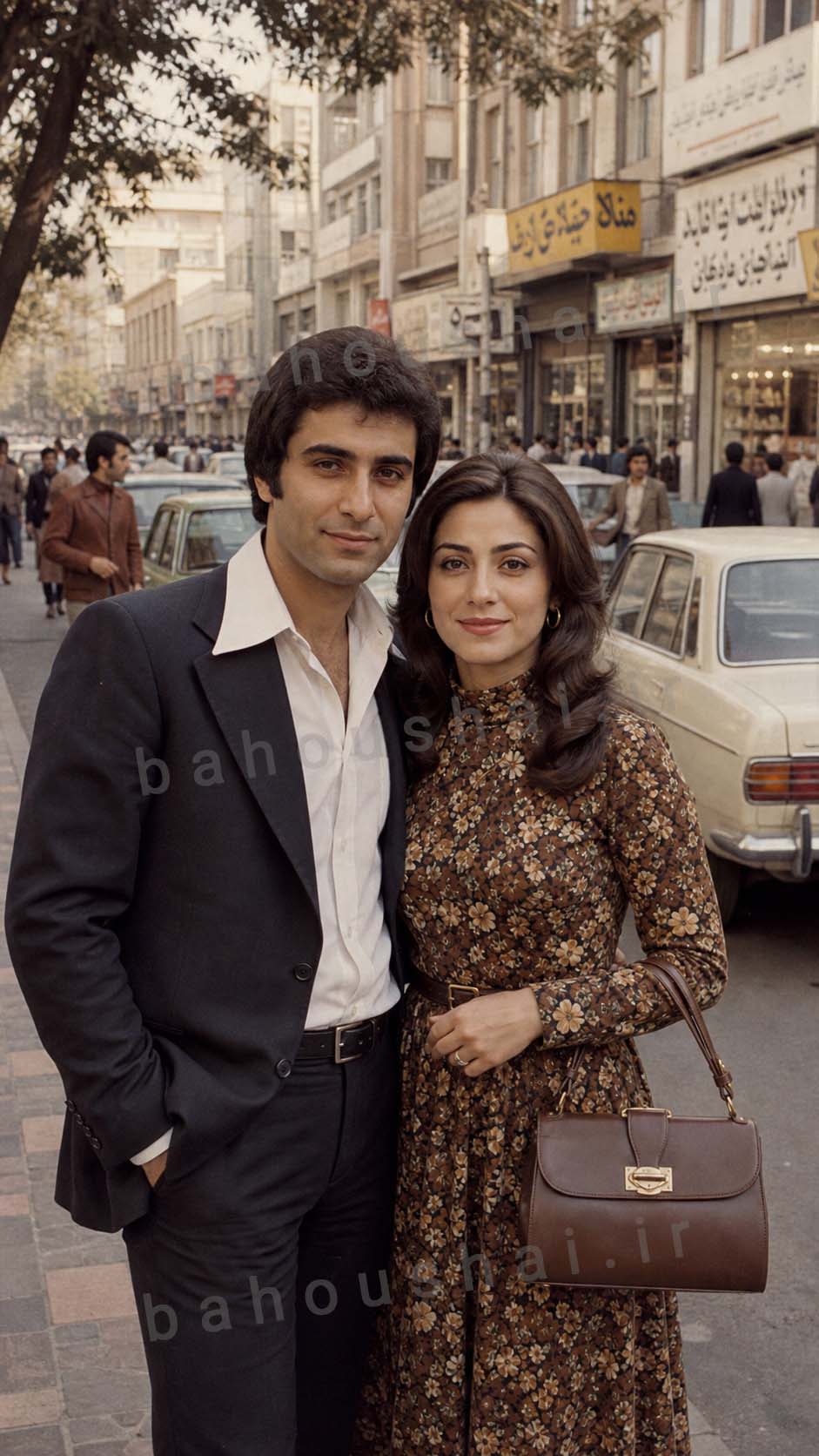
پرامپت:
Photorealistic 1970s Tehran street portrait, Iran in 1350, authentic period atmosphere.
The couple stands side by side, close together, looking directly into the camera.
The man wears a dark vintage suit, white open-collar shirt and classic 1970s styling.
The woman wears a brown floral 1970s dress with a structured vintage handbag and period hairstyle.
Busy old Tehran street, vintage cars, traditional storefronts and urban architecture, no flags.
Vertical 9:16, warm faded film colors, subtle grain, realistic analog photography, nostalgic mood….
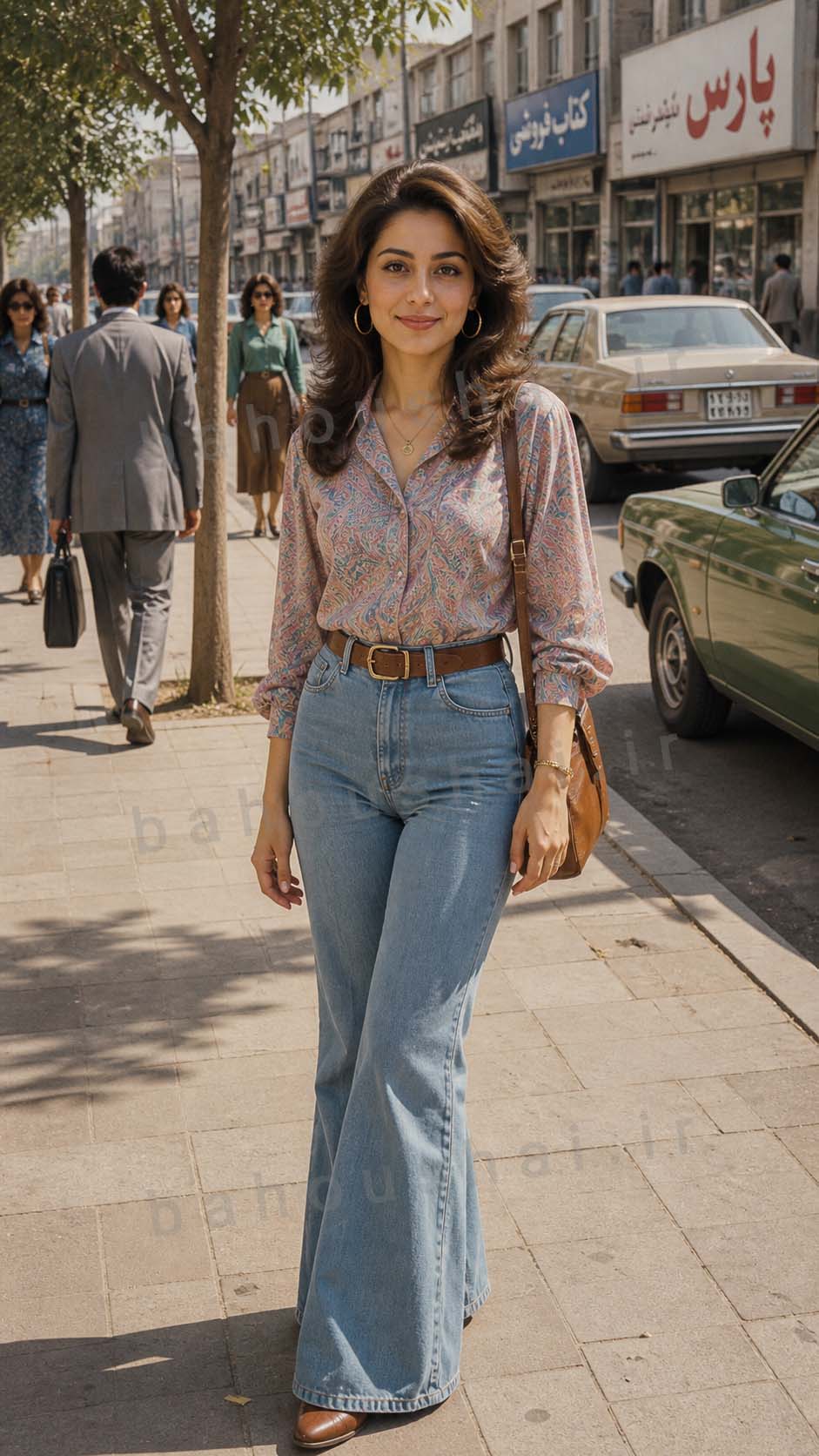
پرامپت:
Transform the person in the uploaded photo into a fully reimagined 1980s version of themselves in a candid, full-body street photograph.
Preserve their identity, age, facial anatomy, proportions, skin tone, and distinctive facial characteristics. Maintain believable anatomy and natural body proportions.
Completely redesign their visible appearance from head to toe. Independently choose a cohesive period hairstyle, outfit, footwear, grooming approach, and accessories. Do not preserve the original hair or clothing as styling constraints
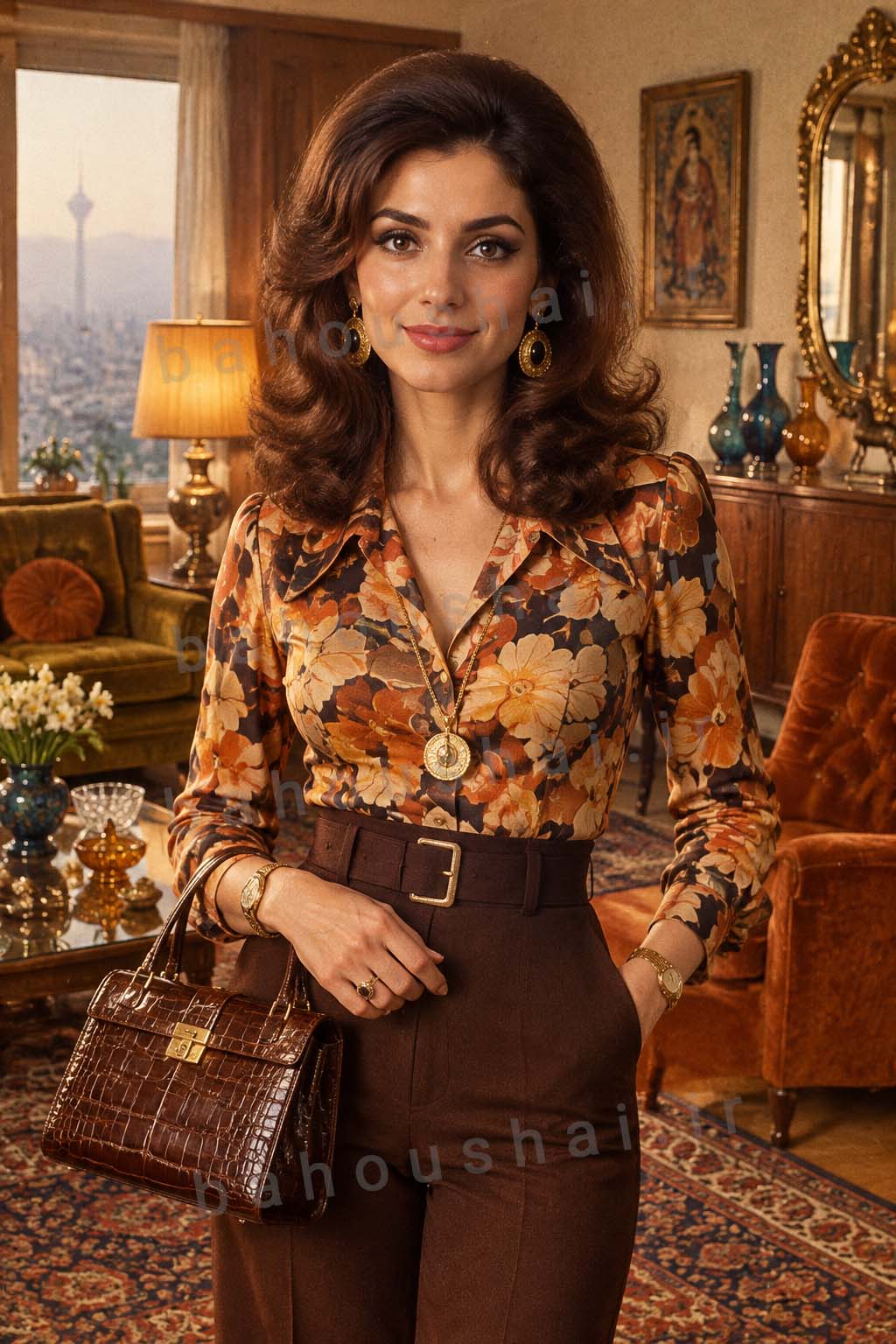
پرامپت:
Transform the scene into luxurious Tehran, Iran, around 1355 Solar Hijri (1976).
I am standing confidently inside an elegant 1970s Tehran apartment, dressed as a fashionable Iranian woman of that era.
Large voluminous vintage hairstyle, sophisticated makeup, elegant fitted 1970s outfit, statement earrings, gold jewelry, vintage handbag, expressive silhouette and authentic Persian fashion.
The interior features Persian carpets, luxurious Iranian furniture, velvet textures, warm lamps, vintage glassware, wooden furniture, decorative mirrors and authentic 1970s details.
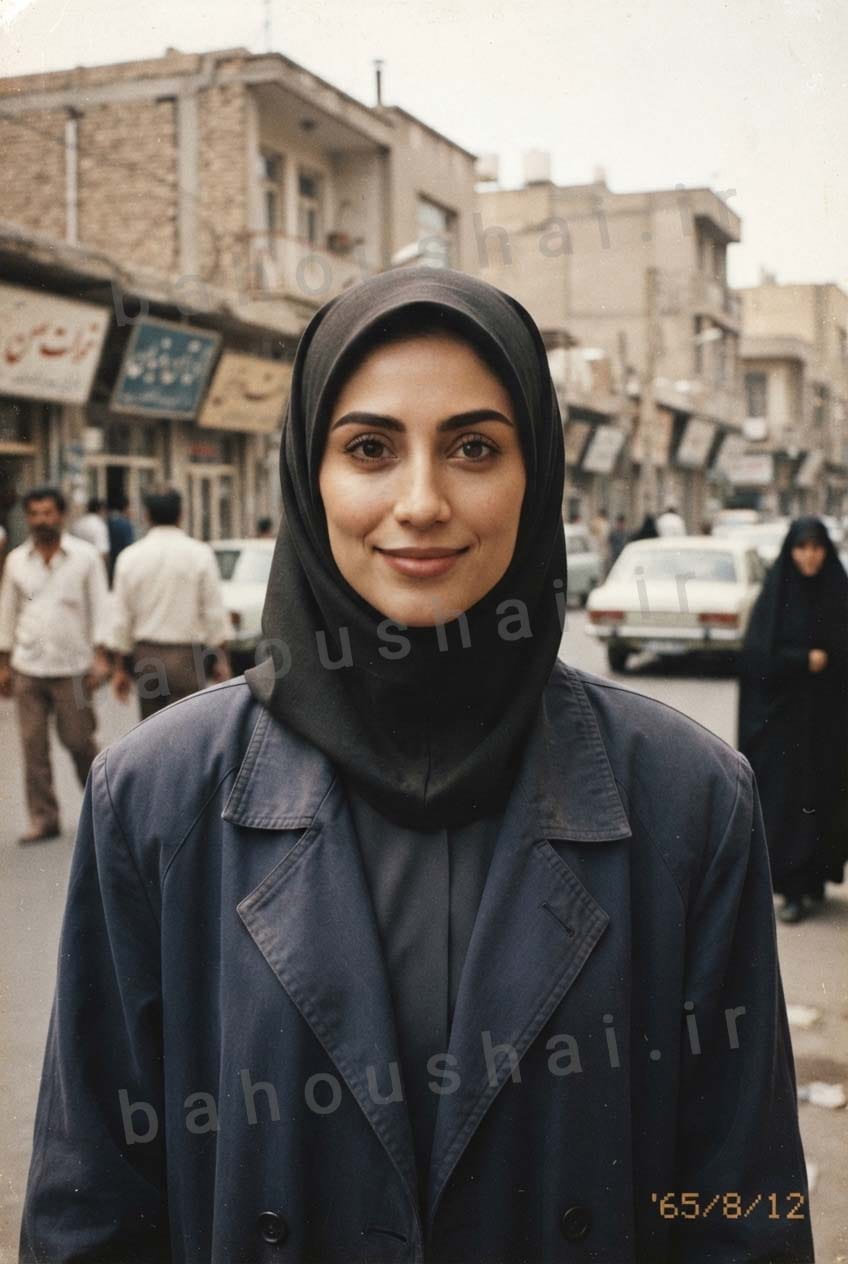
پرامپت:
“What would I have looked like in 1980s Iran? Transform my photo into several authentic photographs set in Iran during the 1980s. Preserve my identity and facial features accurately, but create completely new scenes, poses, clotiing hing, locations and photographic compositions”
پرامپت پرتره مردانه در بافت شهری و خودروهای کلاسیک
این پرامپت برای بازآفرینی استایل مردانه، کتهای دهه هفتادی با یقههای پهن، حضور اتومبیل پیکان و بافت فیلم آنالوگ تنظیم شده است:
Extremely realistic vintage 1970s Iranian street portrait of an Iranian man. Preserve the facial identity, facial features, skin tone, and proportions from the uploaded reference photo. He is standing confidently, casually leaning against an authentic early-1970s Iranian Paykan car with classic chrome bumpers and round headlights. The background features vintage Tehran street architecture, soft Iranian signage, warm afternoon sunlight, 35mm analog color film aesthetic, subtle film grain, natural skin texture, Kodak Portra color tones, shallow depth of field --ar 9:16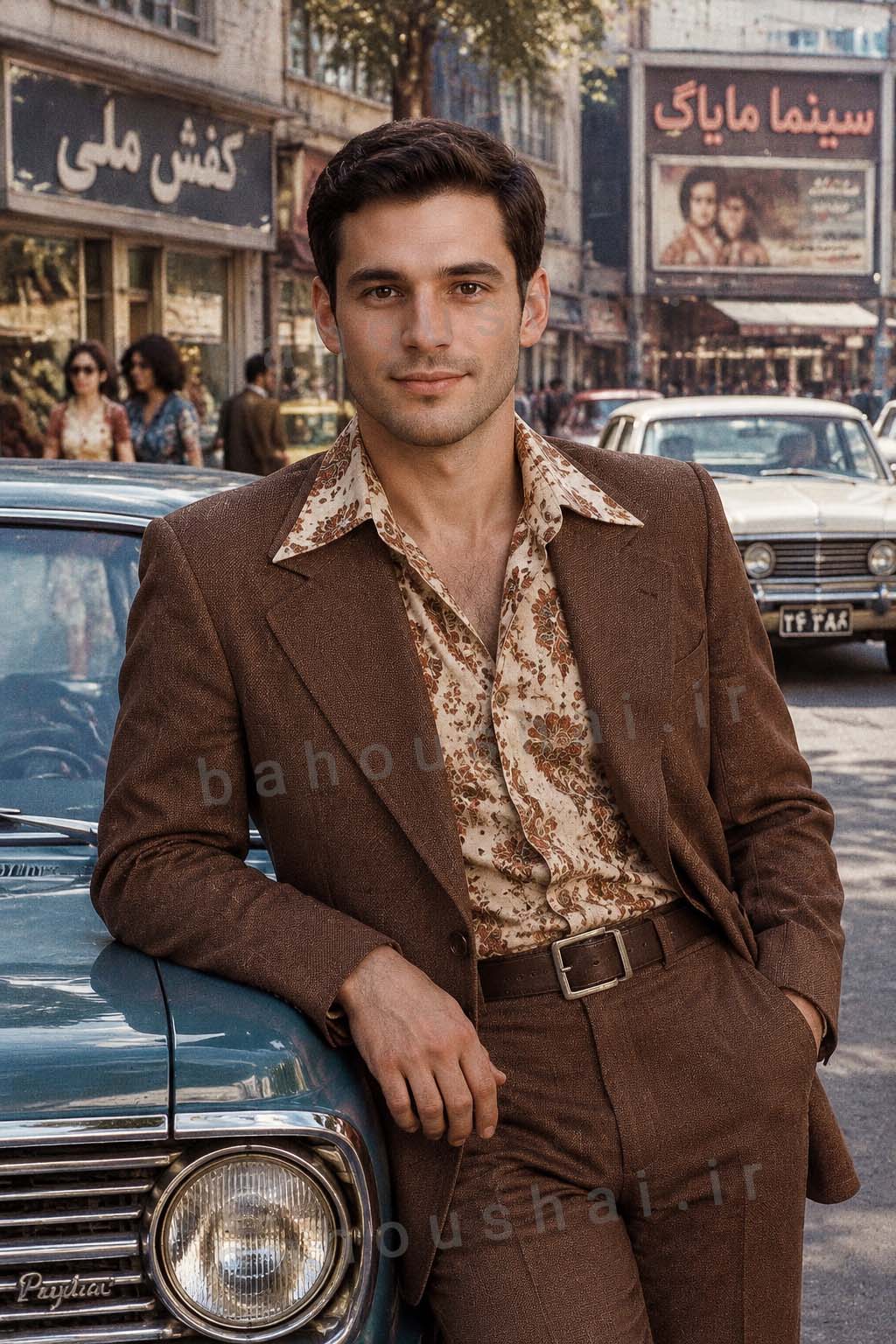
تحلیل عناصر فنی در بازآفرینی استایل عکاسی فیلمی دهه پنجاه
کیفیت و ماندگاری بصری تصاویر تاریخی وابسته به پارامترهای اپتیکال و شیمیایی خاصی است که در عکاسی فیلمی آن دوره رایج بودهاند. برای نزدیک شدن به واقعیترین نتیجه ممکن، آگاهی از این عناصر حائز اهمیت است:
تونالیته رنگی و حسوحال فیلمهای کداکروم
عکسهای دهه ۵۰ ایران عموماً با پالتهای گرم شامل تنالیتههای خردلی، قهوهای، نارنجی سوخته و فیروزهای مات شناخته میشوند. فیلمهای اسلاید کداک و آگفا به دلیل اشباع رنگی غنی در تنالیتههای خاکی و گرم، به تصاویر عمقی سینمایی میبخشیدند که بازتولید آن در هوش مصنوعی با عباراتی چون warm vintage color palette یا Kodachrome 64 tones میسر میشود.
دانه یا گرین آنالوگ (Analog Film Grain)
بر خلاف تصاویر دیجیتال مدرن که شفافیت پیکسلی بالایی دارند، تصاویر آنالوگ دارای بافت ملایمی از دانهبندی شیمیایی هستند. این بافت دانهای به صورت طبیعی لبههای بسیار تیز را تعدیل کرده و با ایجاد خطای نوری ملایم (Optical Halation) در اطراف منابع نور شدید، جلوهای واقعگرایانه و کلاسیک به اثر میبخشد.
عمق میدان و ویژگیهای اپتیکال لنزهای پرتره
استفاده از لنزهای پرایم دستی مانند ۵۰ یا ۸۵ میلیمتری با دیافراگمهای باز (f/1.4 تا f/2.0) در آن دوران باعث میشد سوژه به وضوح از پسزمینه شهری تفکیک شود. در پرامپتنویسی، مشخص کردن عمق میدان کم (Shallow Depth of Field) و بوکه نرم در پسزمینه (Creamy Bokeh) کمک میکند تا حضور ماشینها و تابلوهای قدیمی در انتهای قاب بدون مزاحمت برای سوژه اصلی، حس فضا را تقویت کند.
اصول حفظ هویت و تشابه چهره در خروجیهای نهایی
یکی از چالشهای اصلی کاربران، تغییر ساختار چهره پس از تلفیق با سبکهای تاریخی است. برای حفظ بالاترین میزان شباهت به چهره واقعی، نکات فنی زیر باید رعایت شوند:
- حفظ نسبتهای استخوانی صورت: در دستور متنی صراحتاً قید کنید که ساختار فک، فاصله چشمها و ابعاد بینی بدون تغییر باقی بماند (عبارت: Preserve the facial identity and natural facial proportions).
- پرهیز از زیباسازی اغراقآمیز: مدلها به صورت پیشفرض تمایل دارند پوست را بیش از حد صاف کنند. استفاده از واژگان natural skin texture و subtle imperfections مانع از ایجاد چهرههای عروسکی و پلاستیکی میشود.
- تنظیم جهت نگاه: نگاه مستقیم به دوربین (looking directly into the camera lens) ارتباط عاطفی و احساس واقعگرایی پرتره را به بالاترین سطح میرساند.
بررسی خطاهای متداول در بازسازی تصاویر نوستالژیک و نحوه اصلاح آنها
در فرآیند طراحی و پردازش این دسته از تصاویر، ممکن است برخی ناهماهنگیهای زمانی و جغرافیایی در خروجی ظاهر شوند. شناخت این موارد مانع از هدررفت زمان در مراحل بازتولید میشود:
۱. خطاهای آناکرونیسم یا عناصر ناهمگون زمانی
گاهی سیستم به صورت خودکار المانهای مدرن نظیر اتومبیلهای جدید، شیشههای رفلکس امروزی در ساختمانها، یا عینکها و ساعتهای هوشمند را در قاب قرار میدهد. برای جلوگیری از این خطا، در پرامپتهای منفی (Negative Prompts) عباراتی نظیر modern architecture, contemporary vehicles, modern gadgets اضافه کنید.
۲. رسمالخط و تابلوهای فارسی نامفهوم
مدلهای هوش مصنوعی در تولید متون خطی پیچیده فارسی گاهی حروفی نامنظم یا ناخوانا ایجاد میکنند. برای به حداقل رساندن این ایراد، پیشنهاد میشود در پسزمینه عمق میدان را کاهش دهید تا تابلوها محو و نرم دیده شوند، یا صرفاً اسامی شاخص مانند «کفش ملی» یا «سینما» به عنوان المانهای بافتاری درخواست شوند.
۳. پوششها و الگوهای فرهنگی نادقیق
ترکیب پوششهای سنتی مربوط به مناطق دیگر با لباسهای متداول شهری تهران دهه ۵۰ ممکن است هویت بصری اثر را مخدوش کند. تعیین دقیق آیتمهای پوششی مانند شلوارهای دمپا گشاد (Bell-bottom pants)، شومیزهای ابریشمی با یقههای درشت و کتهای بلیزر دستدوز، تضمینکننده همگرایی اثر با واقعیت تاریخی است.
جمعبندی و چشمانداز تصویرسازی پرترههای تاریخی
هنر تولید تصاویر مفهومی و تاریخی با کمک سامانههای نوین هوش مصنوعی، مرزهای میان فناوری و حافظه جمعی را دگرگون ساخته است. تسلط بر مهندسی پرامپت، شناخت زیباییشناسی بصری دهههای گذشته و رعایت متدهای فنی نگهداری هویت چهره به کاربران امکان میدهد تا آثاری ماندگار و عمیق خلق کنند. پلتفرمهای زایا با هر نسل ارتقا، ظرافت بیشتری در پردازش بافتهای فرهنگی پیدا میکنند و این مسیر افقهای تازهای برای روایتگری بصری و تولید محتوای دیجیتال اصیل فراهم میسازد.